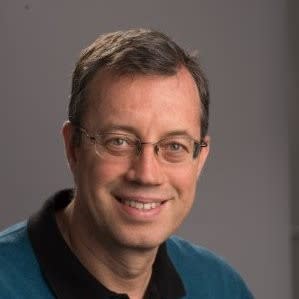
Ion Stoica
CO-FOUNDER/EXECUTIVE CHAIRMAN


In-person . San Jose . October 20 - 21 2026
Stop by booth #P9 to meet the creators of Ray and grab a limited edition Anyscale Tamagotchi.
october 20, 2026 | 9:40AM - 9:50PM | grand ballroom (concourse level)
Ray co-creator Ion Stoica will deliver a keynote on where Ray and Kubernetes are headed together in the AI era.
CO-FOUNDER/EXECUTIVE CHAIRMAN
october 20, 2026 | 2:50pM - 3:15PM | 210b (concourse level)
The AI workload orchestration landscape is currently split across two massive, parallel universes: the CNCF (the bedrock of cloud native and modern infrastructure) and the PyTorch Foundation (the epicenter of AI/ML innovation). While these foundations operate independently, the end user does not have the luxury of choosing just one. PyTorch Foundation contains PyTorch, vLLM, Ray, and more, while CNCF owns Kubernetes, Envoy, OpenTelemetry, llm-d, containerd and more. To build, deploy, and scale modern AI applications, users require a seamless integration of projects from both ecosystems.
This session will explore the critical bridge connecting these communities: the co-evolution of Kubernetes and Ray into a unified OSS AI Stack. We will discuss how Google and Anyscale, together with the broader community, are actively collaborating to build an open, vertically integrated stack that prevents ecosystem fragmentation.
CO-FOUNDER/EXECUTIVE CHAIRMAN

Engineering Director, Kubernetes

october 20, 2026 | 4:55PM - 5:20PM | LL20A (Lower level)
Agents have taken center stage in 2026, with ever-growing interest from companies in training custom agents with reinforcement learning. As agents shift to longer horizon, multi-turn interactions, the systems challenges and requirements on underlying training infrastructure have also evolved. SkyRL is a modular, performant RL library built on Ray to meet this growing demand for customization and scalability. This talk traces where SkyRL started — a set of modular APIs decoupling training, inference, and environment— and where it is today. We will walk through:
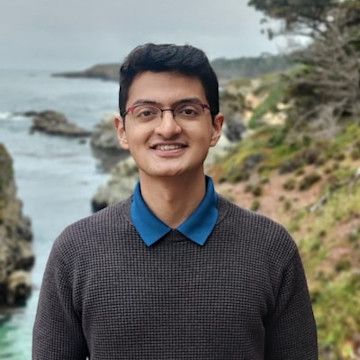
Software engineer, skyrl

Software engineer, skyrl
october 21, 2026 | 3:55pM - 4:05pM | Community expo (concourse level)
Ray Core is a distributed execution engine for AI workloads, with significant adoption in post-training workloads. Post-training requires tight coordination between training and inference engines in both scheduling and data transfer. We evolve Ray Core to support two needs for these emerging workloads: better scalability and better performance.
This talk starts with a quick introduction to Ray Core, the open source runtime underneath post-training frameworks like SkyRL, Miles, and NeMo RL, and how its building blocks map onto a post-training loop. We then cover scalability, including scaling Ray's scheduling to 10,000-node clusters, and performance, including moving PyTorch tensors directly between GPUs with Ray Direct Transport (RDT). We close with where Ray Core is heading next and how to get involved.

Engineering lead, Ray core
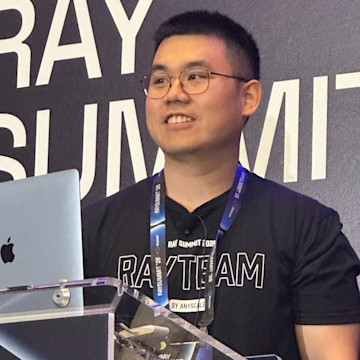
software engineer, ray core